
Rust Repair on Classic Volkswagens
A complete guide to identifying, assessing, and professionally repairing rust on VW Split Window Buses (1950–1967) and VW Beetles — the honest story about what rust actually is, how far it travels, and what it takes to fix it properly.
Key Takeaways
- Surface rust is visible. Structural rust is not — and it’s almost always worse than what you can see from the outside.
- VW Buses and Beetles have predictable rust hotspots: floors, rockers, heater channels, lower nose, battery tray, and windshield corners.
- Rust converters, spray-in treatments, and encapsulants do not fix structural rust — they delay the inevitable on already compromised metal.
- The only permanent fix is cut-and-weld metalwork: remove the rust to clean metal and replace with new steel.
- A restoration shop with VW experience will know where to look — and won’t be surprised by what they find.
The Honest Truth About Rust
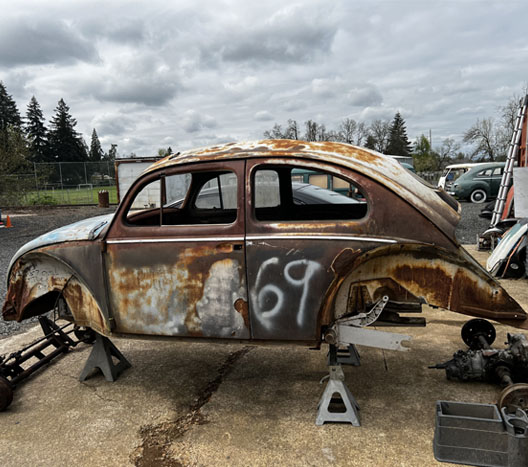
Rust is electrochemical corrosion — iron reacting with oxygen and moisture to form iron oxide. It’s self-propagating: once it starts, it creates conditions that accelerate its own spread. The rust you see on the surface of a panel is the tip of a much larger process happening inside the metal and in the hidden seams around it.
For classic Volkswagens specifically, this matters because these vehicles were not designed with modern corrosion protection. Factory seam sealers dried out decades ago. Original undercoating cracked and lifted. Drain holes designed to clear water plugged with debris. What you end up with, 60–70 years later, is a vehicle that has been quietly rusting from the inside out for most of its life.
The Coverage Rule of Thumb
Whatever rust you can see from a casual inspection, assume there is at least twice as much hidden in seams, channels, and enclosed sections. On heavily patinated vehicles, the ratio is often much higher.
Rust Hotspots by Vehicle
VW SPLIT WINDOW BUS (1950–1967)
The Bus has several predictable rust locations that any experienced shop will check automatically
Step 1 - Heater channels
The enclosed channels running along the floor edges carry the heater air and are notorious moisture traps. Once compromised, they affect floor, rocker, and B-pillar integrity simultaneously.
Step 2 - Floor bays
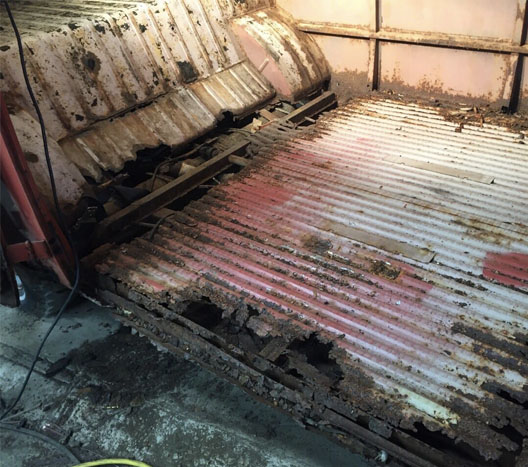
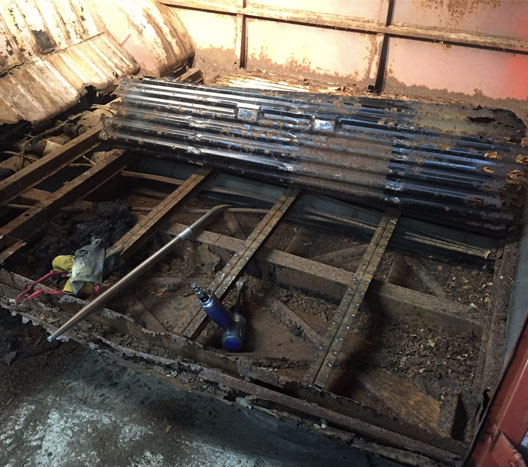
All floor bays — front, middle, and rear — are susceptible. The front bay under the spare tire and the middle bay under the sliding door are most commonly affected.
Step 3 - B-pillars and door posts
On the Bus, B-pillar rust is a structural issue — these posts carry the roof. A B-pillar that’s rusted through at the base requires significant structural repair, not cosmetic treatment.
Step 4 - Nose panel lower section
Road spray and trapped moisture attack the lower nose consistently. Often invisible from outside until the surface is probed.
Step 5 - Cargo floor and rear corners
On cargo and Kombi configurations, the rear floor corners where the body meets the lower corners are a secondary rust hotspot, especially on Buses from agricultural or coastal climates.
VW BEETLE (1946–1979)
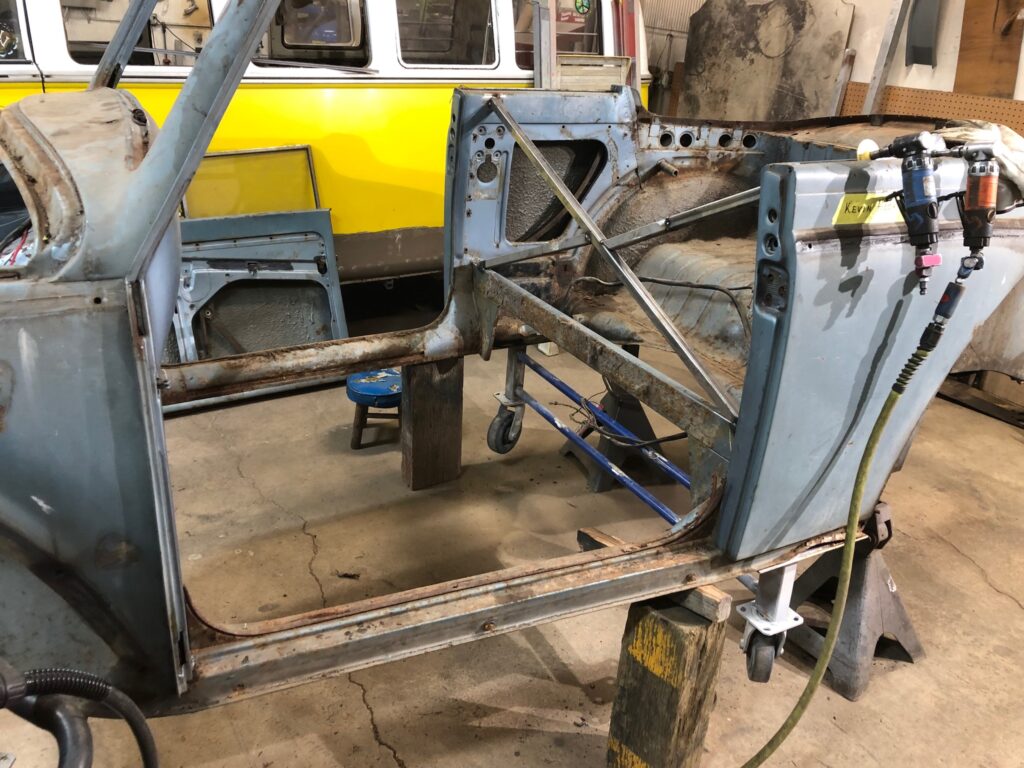
The Beetle has a different but equally predictable rust pattern. The most common locations are the lower rear quarters (behind the rear wheels), the floor pan and central tunnel, the battery tray under the rear seat, and the lower door bottoms. Earlier Beetles (pre-1967) are particularly prone to heater channel rust similar to the Bus — these channels run along the sides of the tunnel and are just as difficult to access and repair.
What 'Fixing Rust' Actually Means
This is where a lot of restoration projects go wrong. There’s a spectrum of treatments commonly marketed as rust repair — and most of them are not repair at all.
Rust Converters and Inhibitors
Products like Ospho, POR-15, and similar converters treat the surface of existing rust. They’re useful for slowing corrosion on accessible, non-structural surfaces, but they do not remove or eliminate rust — they encapsulate it. On structural areas, they’re a temporary measure at best and can hide ongoing corrosion from future inspections.
Spray-In Undercoating and Rubberized Coatings
Applied over existing rust, these products trap moisture inside with the rust and accelerate corrosion on the hidden side. We see Buses and Beetles regularly where a thick spray-on coating looks ‘fine’ from below — but the moment we cut it, we find deeply perforated metal underneath.
Cut-And-Weld Metalwork: The Only Real fix
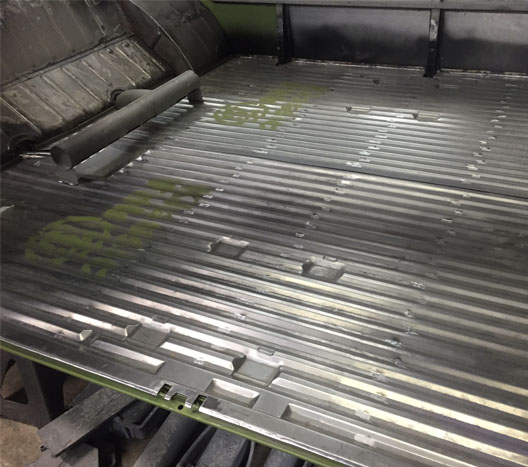
Permanent rust repair means cutting back to clean, healthy metal and welding in new steel. There’s no chemical shortcut. For structural areas — heater channels, B-pillars, floor sections — this is the only approach that maintains the safety and longevity of the vehicle.
The Benchmark
A properly repaired rust section should behave identically to original metal — it flexes, accepts primer the same way, and doesn’t telegraph through the finish coat. If the ‘repair’ doesn’t meet that standard, the work isn’t done.
How We Approach Rust Repair at Silverlining
Our process starts with the assumption that there is more rust than is visible. We strip the area down, probe and test the surrounding metal, and document everything before any cutting begins. Owners know exactly what we found and exactly what we’re doing before the first grinder touches the car.
We cut to clean metal every time — not just past the discoloration, but past the area where the metal has lost thickness. Replacement sections are either sourced from quality reproduction suppliers or fabricated in-house when repro parts aren’t available or don’t meet our fit standards. Everything gets seam-sealed, etched, and cavity-waxed in enclosed sections before any finish materials go back on.
Get an Honest Assessment of Your VW's Rust
We’ll inspect your Bus or Beetle, tell you exactly what we find, and walk you through what a proper repair involves. No guesswork. No surprises. Just straight answers from people who’ve seen it all.
See Our Completed Builds
Call Us: 503-580-1228 | silverliningautorestoration.com