Front Nose Panel Repair on Classic Volkswagens
A practical guide to understanding front nose damage, rust, and collision repair on VW Split Window Buses (1950–1967) — the most visually and structurally complex panel on the most coveted air-cooled vehicle ever built.
Key Takeaways
- The Split Window Bus front nose is a complex multi-piece panel assembly — not a single stamping — which makes repair more involved than most classic cars.
- Rust typically starts at the lower nose seams, around the valance, and at the windshield corners — these are the first places to inspect.
- Quality reproduction nose panels exist but rarely fit perfectly; skilled fabrication is required to achieve factory-correct gaps and contours.
- Previous body filler repairs are extremely common — and almost always need to be removed before proper metalwork can begin.
- The goal is metal that behaves like original: moves correctly, holds paint, and won’t crack or bubble through a finish coat in two years.
What Makes the Bus Nose So Complex?
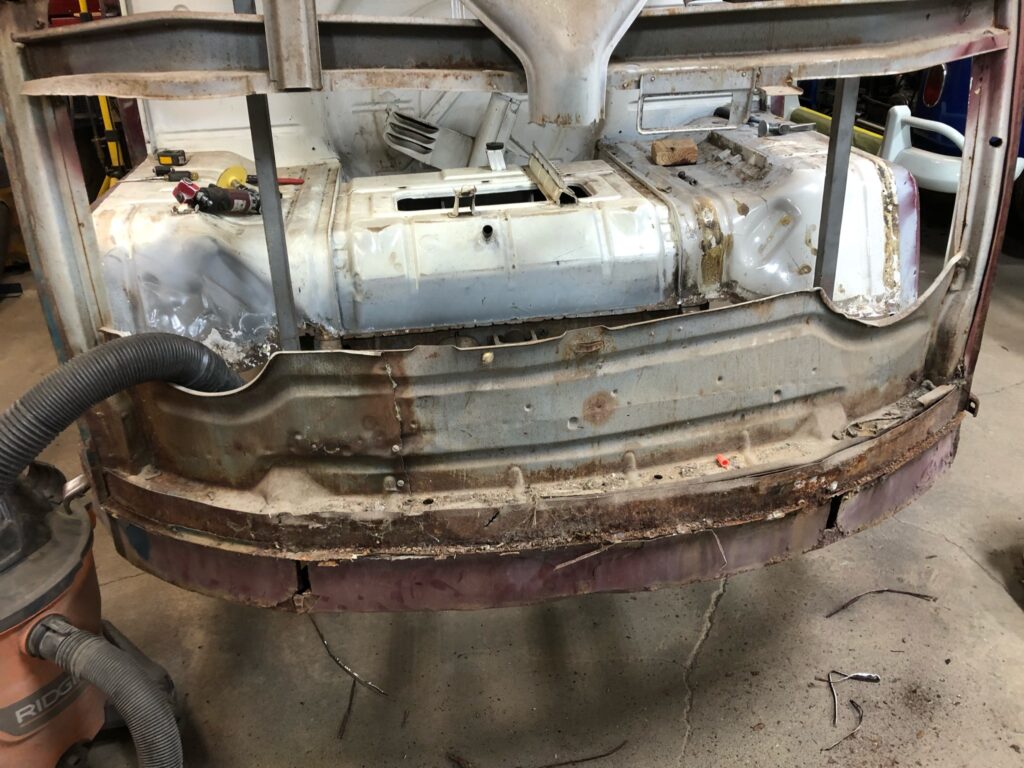
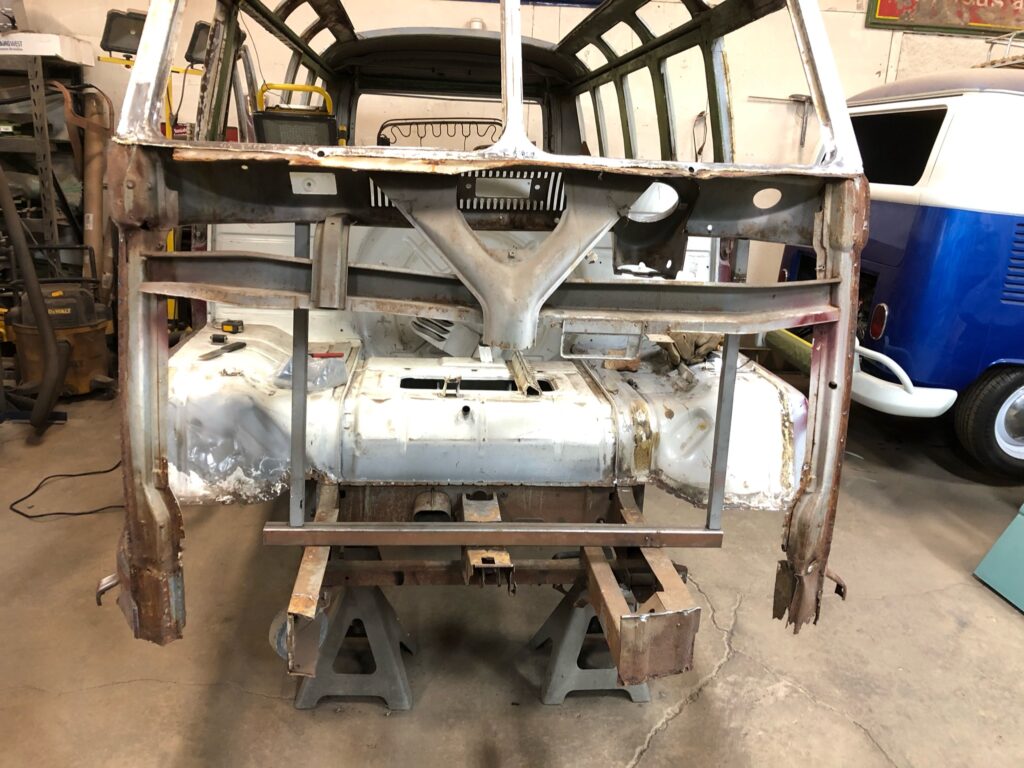
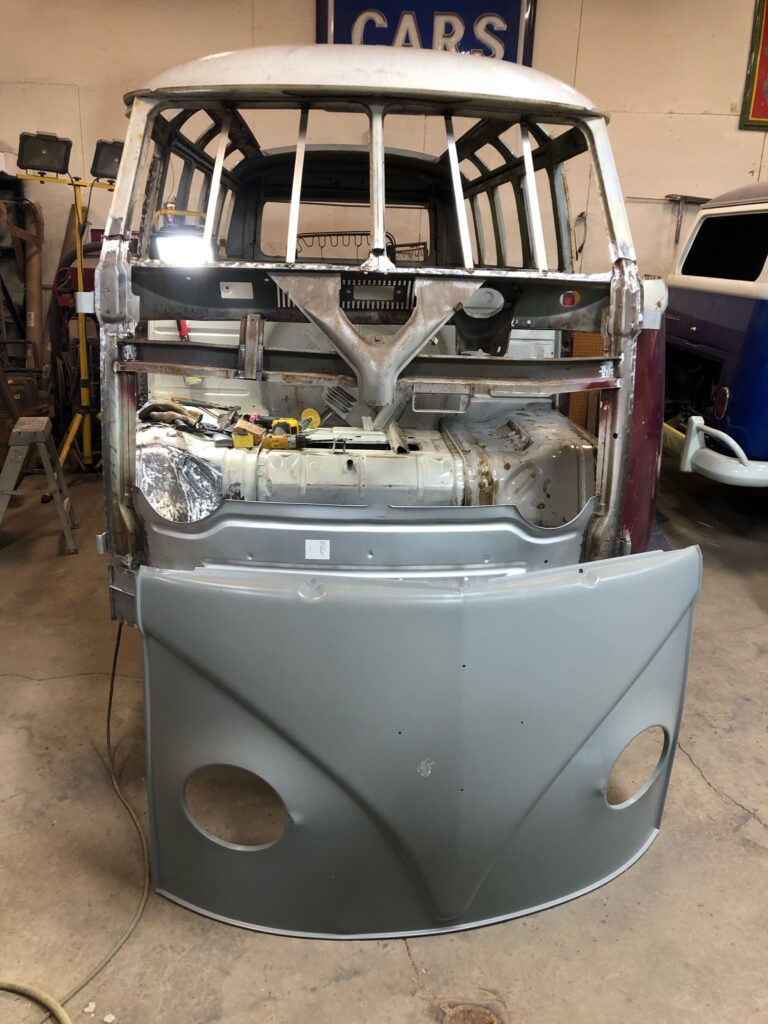
Unlike a conventional car with a hood and front fenders you can unbolt separately, the Split Window Bus front nose is a structural assembly. The nose panel flows into the A-pillars, the windshield surround, the lower valance, and the front apron — all of which are welded together and tied into the roofline. Damage to the nose rarely stays contained to just the nose.
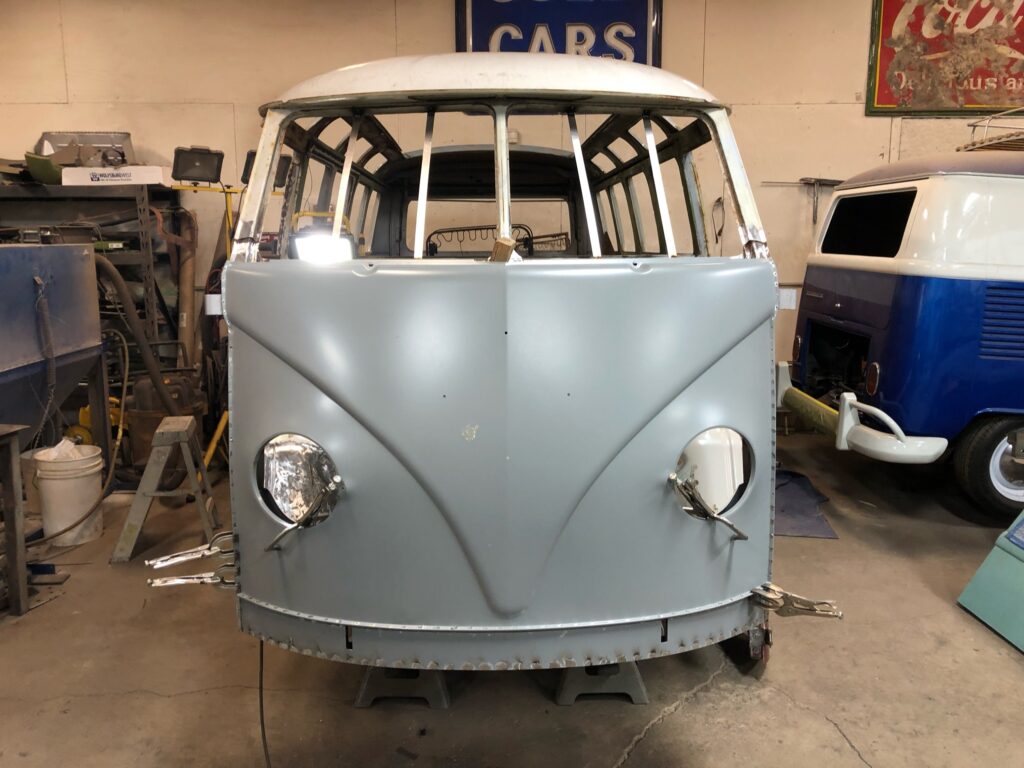
The curvature is also demanding. The Bus nose isn’t flat — it has subtle compound curves that carry the distinctive ‘v’ profile from the roofline down to the bumper. Restoring these curves correctly, whether by reshaping the original metal or fitting reproduction sections, requires experience with English wheel, planishing hammer, and hand shaping that most body shops simply don’t have.
On Reproduction Panels
Several vendors offer reproduction front nose sections for Split Window Buses. These range from quite good to dimensionally inaccurate. We always verify fit before committing to any reproduction panel — a panel that’s off in the nose affects windshield fit, door gaps, and trim alignment across the entire front of the vehicle.
Common Nose Panel Issues We See
Lower nose and valance rust
Road spray, trapped moisture, and decades of deferred maintenance make the lower nose and front valance one of the first rust hotspots on any Bus. This area is particularly tricky because the rust is often invisible from the outside — the original panel folds over at the lower edge, trapping moisture between the layers. By the time you see surface rust, the hidden side may already be perforated.
Common Nose Panel Issues We See
Windshield corner rust
The corners where the windshield frame meets the A-pillars are notorious moisture traps on Split Window Buses. Failed window seals allow water to track down into the corners, and once rust starts here it’s structural — the A-pillars carry the roof load. Any windshield corner repair needs to address the underlying structure, not just the visible surface.
Collision damage and amateur repairs
The front-engine Bus was involved in more than its share of fender-benders over 60+ years, and many of those were ‘repaired’ with body filler rather than metal work. We regularly uncover 1–3 inches of filler on Bus noses during restoration — filler that’s cracked, lifted, and hiding rust underneath. Every one of those vehicles needs the filler stripped, the metal assessed properly, and the work done correctly before any new paint goes on.
The Repair Process — What to Expect
Step 1 - Strip all filler and surface treatments
No repair begins until we know exactly what the metal looks like. All filler, undercoat, and surface product is removed from the repair area. What’s found underneath determines the scope.
Step 2 - Assess and document
We photograph every panel before touching it. This documents the original condition and helps the owner understand exactly what they’re working with before committing to a repair path.
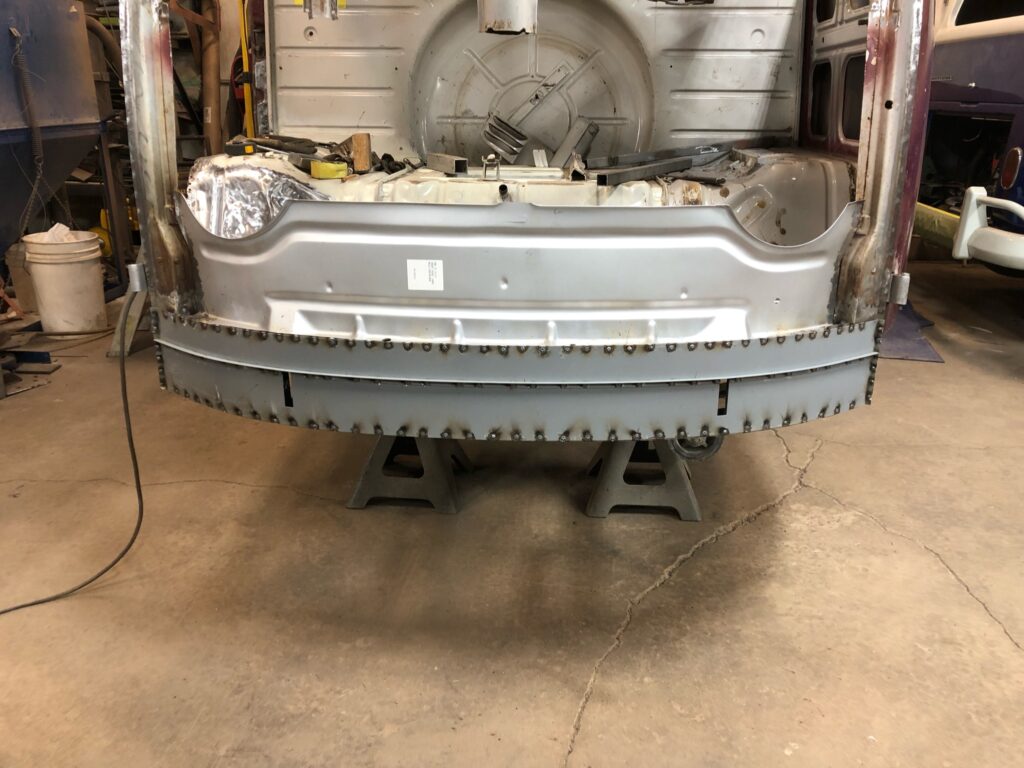
Step 3 - Cut out damaged metal, weld in new sections
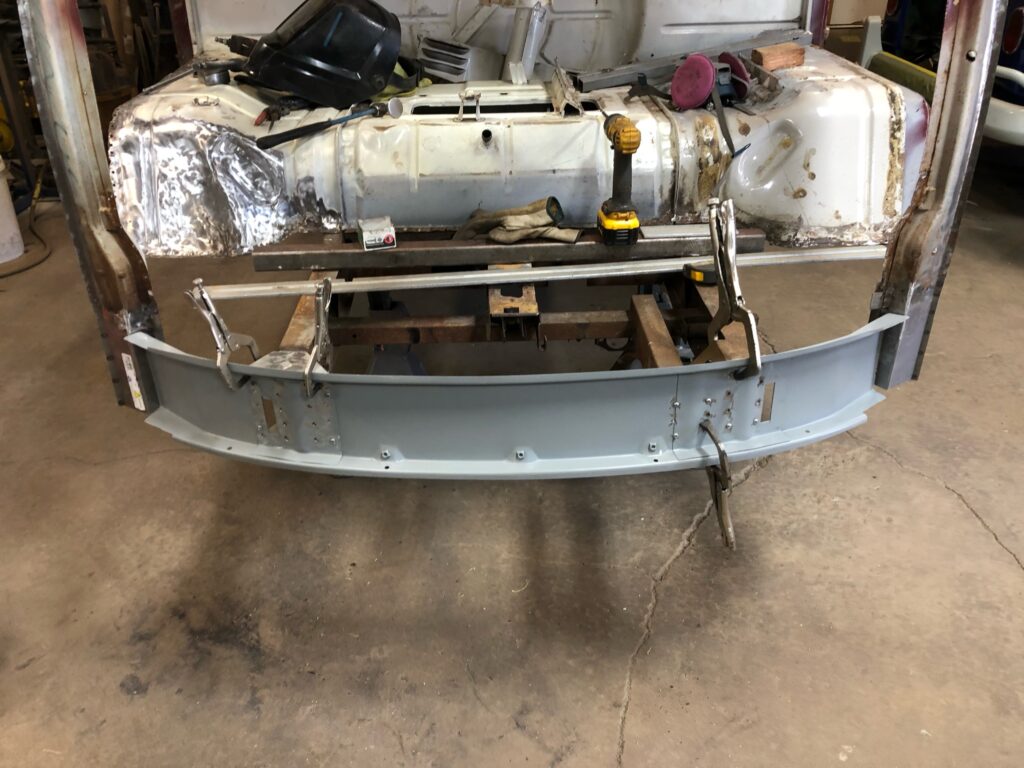
Rust sections are cut to clean metal and new sections — either reproduction or fabricated in-house — are fitted and welded. Gaps are monitored throughout to ensure the nose retains its correct profile and alignment with surrounding panels.
Step 4 - Metal finish and final shaping
After welding, panels are metal-finished using traditional hand tools to achieve the correct surface profile with minimal filler. Our goal is a panel that needs no more than a skim coat of filler at most before primer.
What Good Repair Actually Looks Like
The mark of quality front nose repair isn’t just how it looks fresh out of the shop — it’s how it holds up over time. Properly repaired metal doesn’t crack at the filler lines, doesn’t bubble under paint in summer heat, and doesn’t telegraph previous damage through a new paint job three years later.
At Silverlining, we take pride in metal work that a painter trusts. That means panels that are straight, correctly profiled, and finished with the minimum amount of filler necessary — not panels that look good in photos because they’re covered in body filler that hides structural issues.
Your Bus Deserves Metalwork It Can Be Proud Of
We specialize in Split Window Bus restoration — including front nose fabrication, structural repair, and full metalwork that painters love and owners keep for decades.
See Our Completed Builds
Call Us: 503-580-1228 | silverliningautorestoration.com